

If there’s one mistake that quietly costs restaurants thousands of dollars, it’s buying the wrong refrigerator size.
Too small? You overload it and burn out the compressor.
Too large? You waste energy and floor space.
Poor layout fit? You fail health inspection clearance.
This guide will walk you through exactly how to size a commercial refrigerator correctly in 2026, whether you’re opening a new restaurant or upgrading old equipment.
Why Proper Sizing Matters More Than You Think
Commercial refrigerators are not like residential units.
They:
-
Open dozens (sometimes hundreds) of times per day
-
Recover temperature much faster
-
Operate in hotter, grease-filled environments
-
Must meet health department standards
Oversizing or undersizing doesn’t just affect storage — it affects:
-
Food safety compliance
-
Compressor lifespan
-
Energy cost
-
Workflow efficiency
Sizing is not about guessing. It’s about planning.
Step 1: Calculate Your Storage Volume Needs
Start with daily food volume.
Rule of Thumb (Restaurants)
-
1–1.5 cubic feet per meal served daily
Example:
If you serve 150 meals per day:
150 × 1.25 cubic feet = ~188 cubic feet total refrigeration need
Now divide that by storage type:
-
60–70% refrigerated
-
30–40% frozen (if applicable)
This immediately tells you whether you need:
-
One large reach-in
-
Multiple units
-
Or a combination (reach-in + undercounter)
Step 2: Understand Refrigerator Types Before Choosing Size
1️⃣ Reach-In Refrigerators


Best for:
-
Full service restaurants
-
High-volume kitchens
-
Bulk ingredient storage
Typical capacities:
-
23 cu ft (single door)
-
49 cu ft (double door)
-
72 cu ft (triple door)
Most mid-size restaurants use double-door (around 49 cu ft) as baseline.
2️⃣ Undercounter Refrigerators


Best for:
-
Prep stations
-
Pizza counters
-
Bar areas
Typical capacities:
-
7–15 cu ft
These supplement, not replace, main storage.
3️⃣ Walk-In Coolers
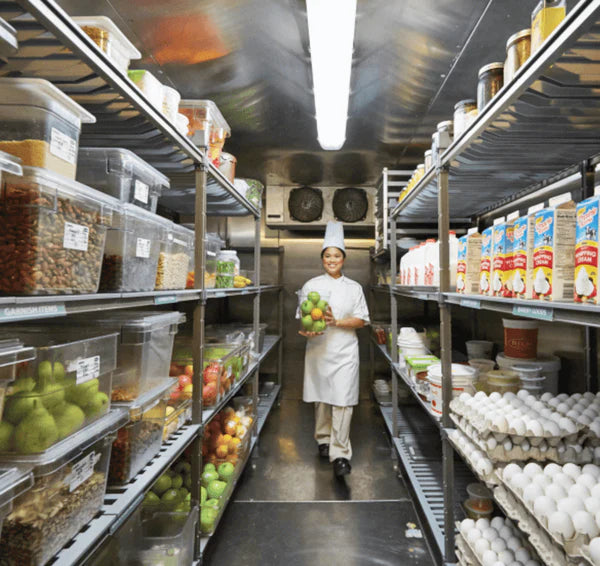
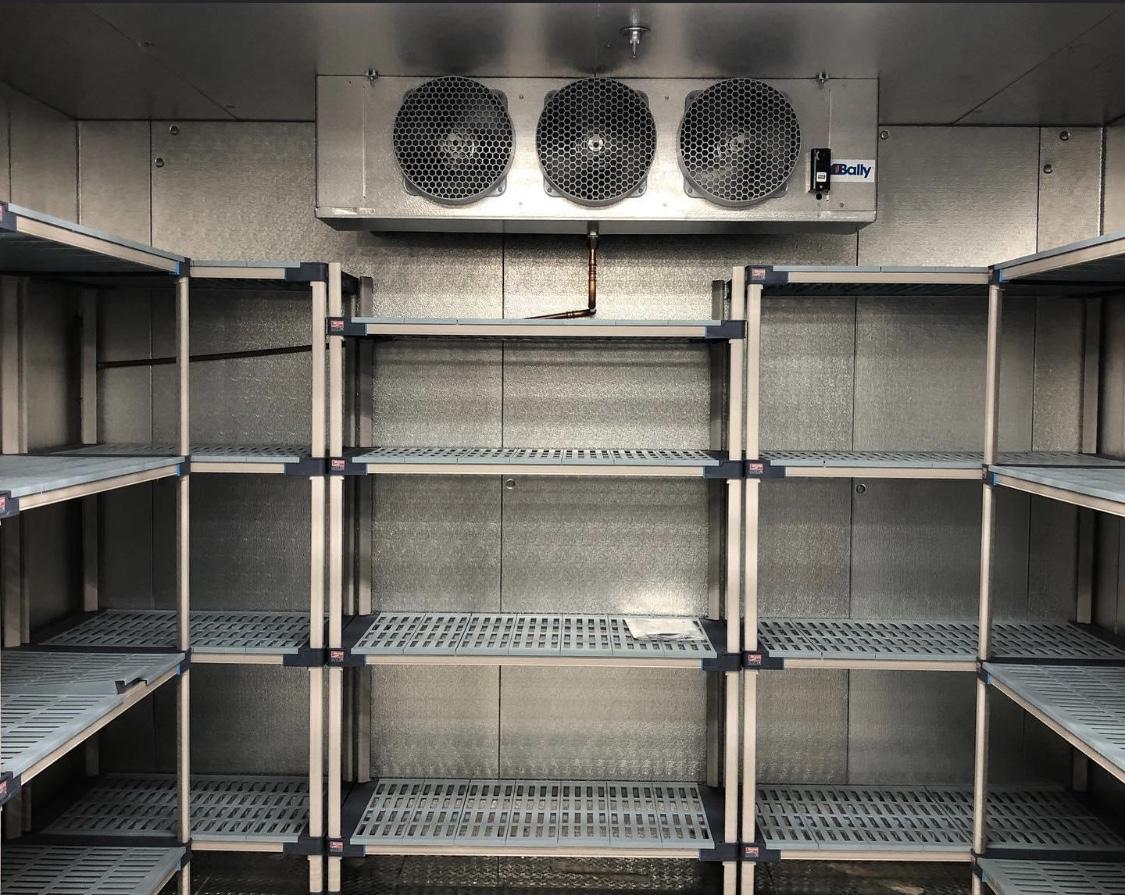

Best for:
-
High-volume restaurants
-
Catering operations
-
Large food storage needs
Sizing depends on:
-
Square footage
-
Delivery frequency
-
Bulk purchasing strategy
Walk-ins are often 6’×8’, 8’×10’, or custom built.
Step 3: Account for Peak Period Load
Many restaurant owners calculate average use — not peak.
Your refrigerator must handle:
-
Friday night rush
-
Weekend catering events
-
Holiday spikes
A unit running at 95% capacity constantly will:
-
Lose temperature stability
-
Shorten compressor lifespan
-
Increase maintenance costs
Ideal operating load:
70–80% max capacity
This preserves airflow and performance.
Step 4: Measure Physical Kitchen Constraints
Before buying, measure:
-
Doorway clearance
-
Ceiling height
-
Ventilation space
-
Electrical capacity
-
Distance from heat sources
Commercial units need airflow clearance (typically 2–3 inches minimum).
Placing them next to fryers or ovens without separation increases energy consumption significantly.
Step 5: Consider Energy and Compressor Type (2026 Update)
Modern commercial refrigerators often use:
-
R290 refrigerant (more energy efficient)
-
High-efficiency compressors
-
Digital temperature control systems
Proper sizing combined with modern refrigerant can reduce energy cost by 10–20% annually.
Smaller restaurants benefit significantly from energy-optimized double-door units instead of oversized triple-door models.
Common Sizing Mistakes Restaurants Make
-
Buying residential refrigerators for commercial kitchens
-
Ignoring ventilation requirements
-
Underestimating growth plans
-
Choosing width without considering depth
-
Not planning separate raw vs ready-to-eat storage
These mistakes cause early equipment failure within 2–3 years.
Quick Sizing Reference Table
| Restaurant Size | Recommended Setup |
|---|---|
| Small Café (under 80 meals/day) | 1 single-door reach-in (23 cu ft) |
| Medium Restaurant (80–200 meals/day) | 1 double-door reach-in (49 cu ft) + 1 undercounter |
| Large Restaurant (200+ meals/day) | Triple-door reach-in (72 cu ft) or walk-in cooler |
Final Recommendation
If you're unsure, it is safer to:
-
Slightly oversize (10–15%)
-
Never operate beyond 80% load
-
Prioritize airflow and compressor quality over sheer cubic feet
Sizing correctly protects:
-
Food safety
-
Equipment lifespan
-
Your long-term operating cost
If you are currently evaluating options, you can explore our commercial refrigeration collection here:


